
Every year, one in four seniors experiences a fall — and nearly 80% of these incidents are preventable. Simple yet powerful steps to make homes safer for seniors, while encouraging a positive mindset toward aging and independence.
Think Safety, Not Fragility
Home modifications are enhancements for safer, smarter living — not responses to disability. Embracing a proactive attitude makes it easier to adopt small safety improvements that can prevent major accidents.
Preventing Falls and Injuries
Falls are the leading cause of injury among older adults and can lead to fear, loss of mobility, and dependence. Simple preventive measures — from better lighting to clutter-free pathways — can drastically reduce these risks.
Safer Entrances and Secure Access
Safety starts at the doorstep:
- Installing bright or motion-sensor lights at entry points.
- Using video doorbells or CCTV for monitoring visitors.
- Keeping a small table outside for deliveries to avoid rushing.
- Opting for smart locks (code or fingerprint-based) for ease of access.
She also advised keeping a spare key with a trusted neighbor or relative.
Flooring & Clutter Management
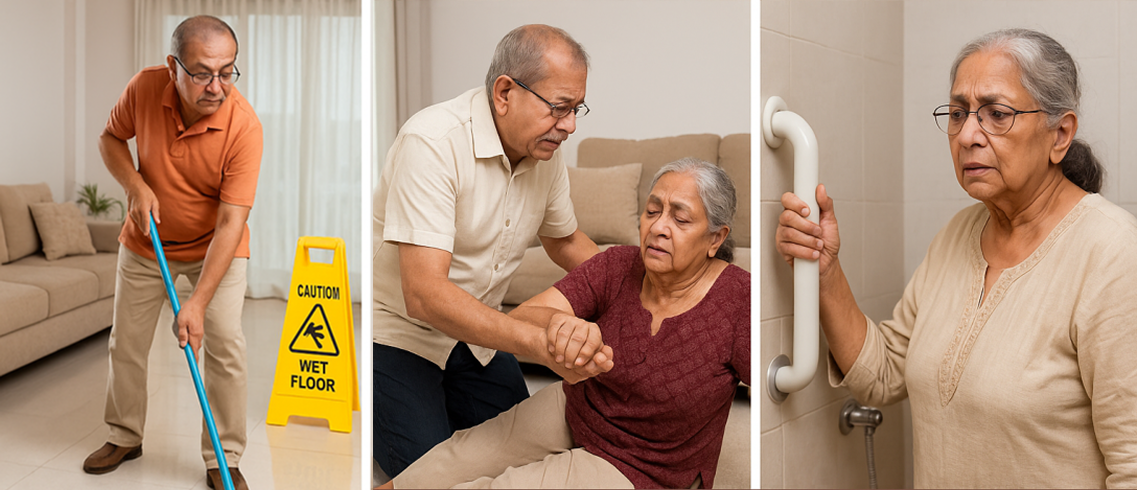
Slippery floors and clutter are top fall hazards. Choose anti-skid tiles with an R-rating of R10–R13, especially in bathrooms. Avoid small rugs or loose mats, and keep passageways clear of obstacles. If rugs are used, secure them firmly to the floor.
Light the Way
Good lighting makes a world of difference –motion-sensor lights in bedrooms and bathrooms for nighttime use, and smart lighting that can be voice-activated through Alexa or Siri. Soft footlights or night lamps help guide movement at night.
Bathroom Safety Essentials
Bathrooms are where most slips happen. Key upgrades include:
- Grab bars near the shower and toilet.
- Anti-slip mats or stone mats in wet areas.
- Raised toilet seats for those with joint issues.
Avoid bathing right after taking blood pressure medication and skip very hot water to prevent dizziness.
Bedroom Comfort and Safety
In bedrooms, avoid very low beds and opt for firm mattresses and memory foam or gel pillows. Keep a lamp within reach and ensure night lights provide gentle illumination for movement after dark.
Footwear & Mobility Aids
Footwear plays a key role in stability –rubber or polyurethane soles with good grip, Velcro straps instead of slip-ons, and custom insoles for those with diabetic or foot issues.
For added support, use a walking stick of the right height (up to the wrist crease) with an ergonomic handle.
Mindset Matters
Beyond physical safety, mental well-being and a positive outlook are crucial to longevity. As per a 2016 study, seniors with strong mental health often live longer and happier lives. Seniors can focus on improving mental agility through brain teasers, light exercise, and yoga for seniors.
Final Takeaway
Creating a safe home doesn’t mean giving up independence — it means protecting it. With a few thoughtful changes and a positive mindset, seniors can continue living confidently, securely, and joyfully in their own homes.